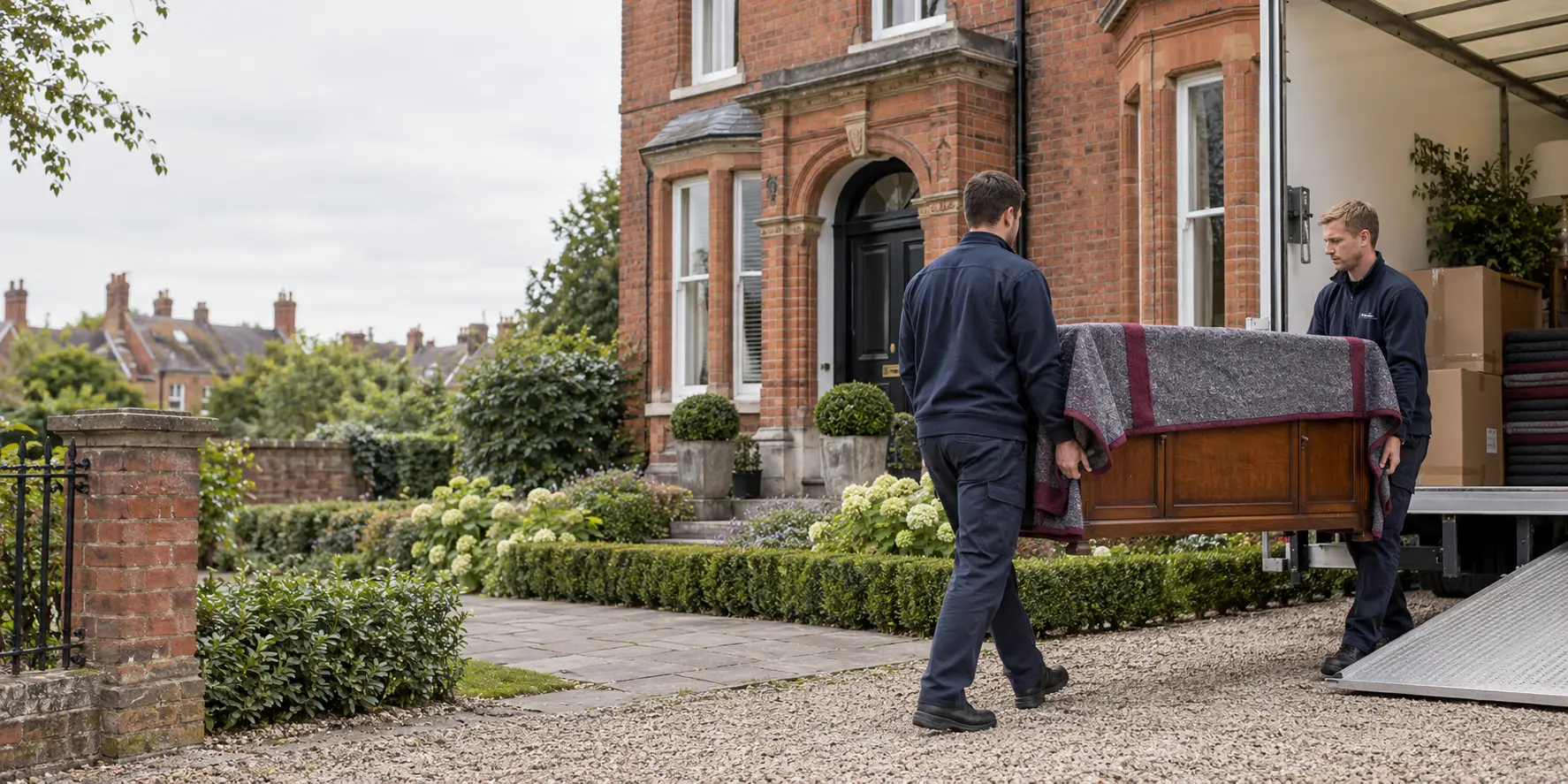
Office removals Dunnington
Office removals Dunnington should be planned around the real addresses and access available. Britannia Olivers provides survey-led office removals for Dunnington, with packing, storage and moving-day planning matched to the property and access.
Britannia Olivers plans each move around the volume being moved and the access available on the day. Our York team can discuss survey-led removals, packing and storage without pretending that every workplace in Dunnington presents the same job.
Keep the quotation request current as plans develop. Confirm which address is the collection point, which is the delivery point and whether either premises has a fixed handover time. If another contractor, landlord or building manager controls access, record the contact route and agreed window. Clear responsibility for these practical details helps the survey become an executable moving plan rather than a collection of assumptions.
Established 1897
Survey-led planning
Careful moving-day delivery
A calmer way to plan your move
Dunnington has a recorded population of approximately 3,230. The survey and quotation are based on the actual addresses, contents and access rather than population alone.
Households in Dunnington move for work, education, family and property changes across York, Yorkshire and the wider UK. Timing, key release and access are confirmed for the individual move.
The useful starting point is not a generic mileage figure. We need the exact collection and delivery points, likely dates, premises type, approximate contents and anything already known about parking, stairs, lifts or restricted approaches. Those details determine the survey and quotation route.
Our role is to turn that information into a workable removal plan. That may include packing materials, fragile-item preparation, storage between dates, protection for floors and doorways, and a sequence for loading that keeps essential items accessible.
A useful survey also separates confirmed facts from decisions that can wait. The fixed points are the two addresses, the items to be moved and any access restriction already known. Dates, packing scope and storage can then be refined without losing sight of the practical job. For Dunnington, photographs can help with an initial discussion, but they do not replace measurements or an on-site check where vehicle position, stairs or unusually large items could change the plan.
The inventory should identify furniture, boxed contents, appliances, outdoor items and anything excluded from the move. Room-by-room notes make it easier to estimate volume, select protection and decide what should be loaded together. They also reduce ambiguity if the quotation changes. A clear inventory is particularly valuable when a move includes storage, phased delivery or a handover window controlled by another party.
Plan the move around the real premises
Every removal is shaped by the volume being moved, the access at both addresses and the services required. The survey turns those practical details into a clear written quotation and working plan.

Access, parking and the working route
Access in Dunnington varies by street and property. We check the lawful loading position, carrying distance, gates, steps, stairs, lifts and shared entrances at both addresses.
The route from Dunnington is planned around the named collection and delivery addresses, current restrictions and the vehicle selected after survey.
Properties in Dunnington can include older homes, terraces, semis, detached houses, flats and newer developments. The survey records the real layout rather than assuming one property type.
For a move in Dunnington, confirm parking controls, building requirements, school-time pressure and any temporary road restriction close to the moving date.
A survey records the usable loading position, carrying distance, steps, door widths and any shared entrance. Where a bay suspension or other permission may be needed, check the current authority process early. The quotation can then reflect the actual crew, vehicle and protection requirements rather than relying on assumptions.
Access is checked at both ends of the journey. A straightforward collection does not guarantee a straightforward delivery, and the reverse is also true. The working plan records where the vehicle can stand lawfully, how far the team must carry, whether doors or gates can be secured, and whether residents, customers or neighbours need a route kept clear. If circumstances change before the move, the customer should send the revised information rather than waiting until the crew arrives.
Vehicle choice follows the survey. A larger vehicle may reduce journeys but is not automatically the best option for a narrow approach, restricted turn or distant loading point. Where necessary, the plan can use a smaller vehicle, a shuttle arrangement or a different loading sequence. These are operational decisions based on the named addresses—not generic claims about every road in Dunnington.
Read more about access planning
Photographs or a video survey can help identify narrow approaches, long carries, steps, lifts, gates and restricted loading positions. Confirm the same information for the destination because straightforward collection access does not guarantee straightforward delivery.
Early access information helps us select the suitable vehicle, crew and protection and reduces avoidable disruption on moving day.
Packing, storage and preparation
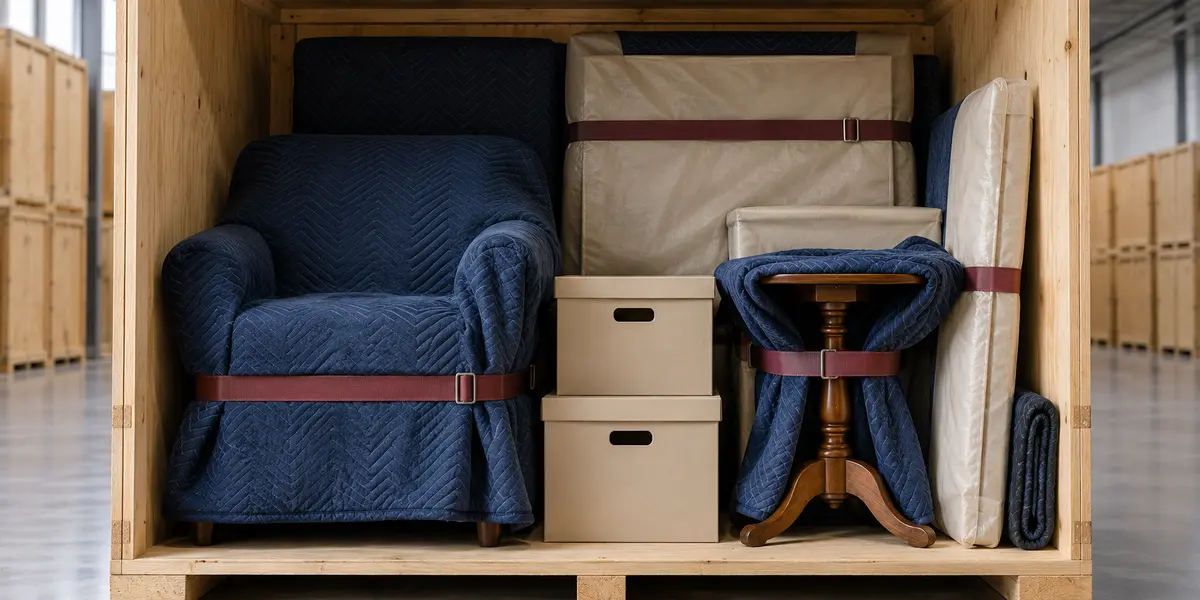
Packing is most useful when it matches the business. Some customers need materials and guidance; others want selected fragile items packed; others require a more extensive service. During the survey, identify artwork, mirrors, clocks, instruments, large furniture, appliances and anything that may need dismantling or special protection.
Agree who is packing each category and when it must be ready. Customer-packed cartons should be closed, labelled and suitable for their contents; fragile or high-value items need to be declared rather than hidden in an unmarked box. Britannia Olivers can then explain the available packing scope and record any item requiring additional materials, dismantling or a handling plan.
Storage can bridge a gap between dates, support renovation work or hold only part of a business. Tell us what must be stored, for how long if known, and what may need earlier access. Keep medicines, documents, keys, jewellery, chargers and immediate essentials with you.
For storage, an inventory and access plan matter as much as duration. Items needed early should be identifiable, while unsuitable, prohibited or personally essential items should remain outside the consignment. If the final delivery address or date is not confirmed, say so at quotation stage so collection, storage and onward delivery are treated as connected parts of the same move.
Read more about moving-day preparation
Agree who is packing each category, label cartons by destination room and separate belongings that are staying, travelling personally or entering storage. Report changes to the inventory or dates promptly.
Keep documents, medicines, jewellery, keys, chargers and immediate overnight essentials with you rather than in the removal vehicle.

From enquiry to moving day
A clear sequence keeps the survey, preparation, collection and delivery aligned.
01 — Tell us about the move
02 — Complete the survey
03 — Review the quotation
04 — Prepare for moving day
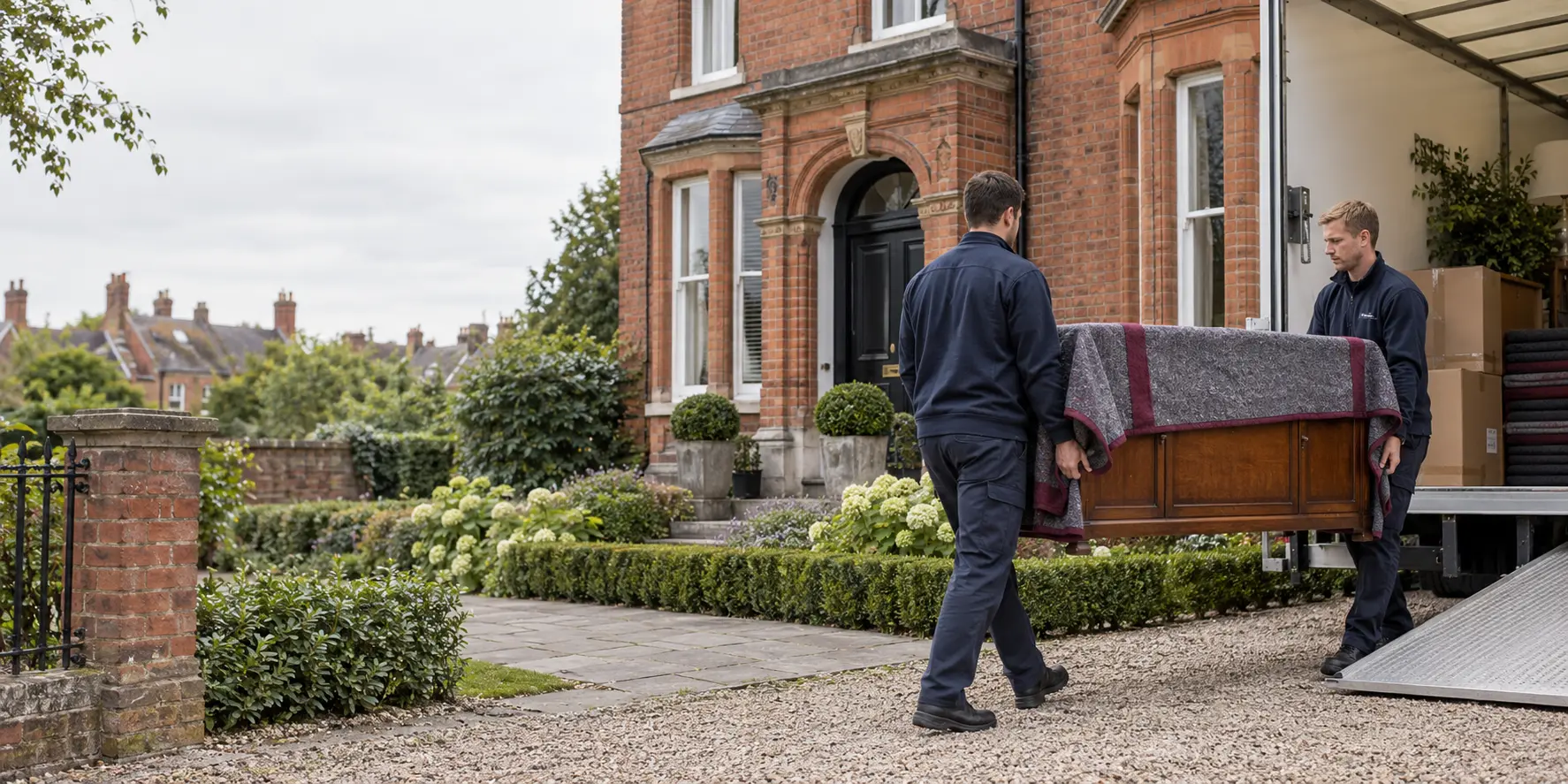
Local planning for Dunnington
For current information, use the City of York Council roads and parking, North Yorkshire Council roads, parking and travel and NHS service finder. These are independent sources and their rules can change.
The map identifies the general service area; it is not a quotation boundary or a promise about vehicle access. We confirm both addresses individually.
Use local sources for the question they can actually answer. An authority parking page can explain current restrictions or application routes, while the NHS finder is appropriate for current healthcare services. Neither source determines the removal quotation. Save any permission reference, building instruction or agreed loading window with the move details so the crew is not relying on an unverified recollection.
Where a rule or road condition may change, check it again close to moving day. Screenshots and links supplied weeks earlier are useful evidence but not a guarantee that a suspension, closure or access arrangement remains current. The customer remains responsible for giving accurate address and premises information; the removal plan then translates those facts into crew, vehicle, protection and timing requirements.
For current information about roads, parking and travel, consult North Yorkshire Council. Requirements can change, so confirm the current position rather than relying on an old assumption.
Prepare the premises before collection
Before moving day, confirm key arrangements, parking, changes to the inventory and any new restriction at either premises. Label boxes by destination room, separate items that are not travelling and make sure the moving team can reach the agreed entrance.
Create a small personal moving pack for documents, medicines, chargers, keys, basic tools, refreshments and immediate overnight needs. Confirm utilities, meter readings, appliance preparation and key arrangements separately from the removal inventory. On the day, one named customer contact should be able to answer questions and confirm which rooms and items are included.
Read the detailed moving-day checklist
Confirm parking, gates, lifts, keys, appliance preparation and any change to the agreed inventory. Clear the working route and nominate one person who can answer questions for the crew.
At the destination, label priority rooms and keep access routes clear so unloading can follow the agreed sequence.
Inventory and protection
Access at both addresses
Essentials kept with you
- Send the essentials. Give us both addresses, your likely date, premises type, approximate contents and any known access concern.
- Complete the survey. We confirm volume, unusual items, stairs, parking, packing and storage requirements.
- Review the quotation. Check what is included and tell us if the inventory or dates change.
- Prepare the premises. Arrange permissions, separate personal essentials and label items by destination room.
- Confirm final details. Share key-release arrangements and last access updates so the team arrives with the right plan.
Read more about House removals, see our areas covered, learn about packing services or discuss storage.
After the survey, read the written scope as an operational checklist. Check the addresses, inventory assumptions, packing responsibility, storage requirement, access information and any service expressly excluded. If a completion date, tenancy handover or building booking changes, update the removal team promptly. An accurate revision before moving day is safer than asking the crew to improvise around information that no longer matches the quotation.
The same discipline applies at delivery. Identify the destination rooms, protect any vulnerable route through the premises and keep the unloading area available. Report an access change before arrival wherever possible. This allows the team to review vehicle position, carrying distance and sequence while there is still time to adjust the working plan.
Read more about coordinating the final details
Share key-release arrangements, parking references and last access changes before the crew arrives. One named customer contact should be available to confirm what is included and answer practical questions.
The move then follows the written plan: protection, collection, transport, storage where agreed and delivery into the nominated rooms.
Frequently asked questions about Office removals Dunnington
Open each question for a detailed answer about planning a business move in Dunnington.
Request your removals quotation
Tell us the collection and delivery postcodes, likely date, premises types, occupied rooms, access restrictions and any packing or storage requirement.
The more specific the enquiry, the more accurately the survey and written quotation can reflect the work.
Office removals near Dunnington
Osbaldwick · Stockton on the Forest · Heslington
For a tailored price, tell us the actual addresses, likely date, premises details and any packing, access or storage requirement.
A quotation is strongest when the enquiry is specific. Include the collection and delivery postcodes, premises types, likely date, number of occupied rooms and a brief description of loft, garage, shed or outdoor contents. Mention stairs, lifts, long paths, parking controls and large items at the outset. If the move is part-load, phased or connected to storage, explain the sequence required rather than describing only the first collection.
After receiving the quotation, compare it with the information supplied. A missing room, added storage period, changed address or new access restriction can alter the operational scope. Send changes in writing and ask for confirmation before the booked day. This creates one current plan for the customer and removal team, reducing avoidable delay and disagreement.